As I'm sitting here listening to the rain, mustering up the motivation to finish my final paper due tomorrow, the last day of class, I can't help but think of how true the old adage is: when it rains, it pours.
I didn't get the internship that I wanted. I am extremely frustrated and disappointed by this. I do have an internship interview next week with a local school district, but I'm just not sure about that either.
Work at the mental hospital on Wednesday was a disaster. A major disaster. FOUR patients escaped. FOUR. Three have been returned, but one - the most dangerous of the four - is still loose. It's made the news all over not just the local area, but the kids' home state (we take in patients from all over the country) as well. It's been in the local newspapers, their home state newspapers, and reported on at least 3 news stations that I know of. The Executive Director and another high-level administrator have been fired over it. And now I'm a target as well, apparently. Even though I wasn't even remotely involved in the situation, as on Wednesday I did not work on the unit that the escapes occurred from.
Why? Naturally, I posted some of the articles on Facebook. Now, I was careful, as always. I don't believe I did anything wrong. Due to my busy schedule(work, internship, *and* classes), Facebook is a primary method of keeping in touch with close friends and family. I have my privacy settings as such that only those on my friends list can see anything on my page. Furthermore, I have at least a couple of "lists", so that if I choose, I can block content from even groups of my friends. I do have a few current and former co-workers on my list, but it is mostly friends from undergrad, friends from home, family, or non-work related friends living in my local area. The articles didn't list any identifying information on any of the patients except the one who is still missing. I did add some of my own comments and a couple of complaints regarding the situation, but again, no information was disclosed that isn't already public knowledge now due to being in the newspapers. In fact, one article I *didn't* post specifically *because* it listed the names and ages of all four escapees, rather than just the one who is still at large. In addition, I know of at least 3 other staff on my friends' list, including one who is a supervisor, who posted the very same articles on *their* pages.
Jump to this morning. I wake up to a text from the Day Shift supervisor, to call her ASAP. When I spoke with her, she told me that I was asked to come speak with the CEO and new admins who replaced the ones who got fired. I didn't think much of it, honestly. One other time a patient got away for a length of time, staff were all called in as a group to discuss the situation (interpreted: find someone to blame for his escape). In that particular instance, it was an all-staff meeting. So I thought this was another one of those - go, hear how this is all our fault, smile and nod, and go home. Imagine my surprise when it was a meeting to basically tell me to stop posting the articles on facebook, or lose my job. This infuriates me on several levels. For one, my content is friends only, so I have a rat on my friends list I need to find and delete. For another, I posted PUBLIC INFORMATION, and therefore did not violate HIPPA, privacy, or confidentiality laws, in spite of their accusations. Thirdly, other co-workers, including a current supervisor, have posted the exact same content with, so far, no similar repercussions that I know of (I know at least one co-worker would tell me, because we're really good friends and I've discussed this situation at length with her). I got a big speech about how it was "very bad judgment" and violation of confidentiality, and "if we get shut down, you'll be unemployed too". In shock over the absurdity of the whole thing, I smiled and nodded, gave my perspective when asked, and went home with the understanding that if it continued to happen, I would be fired.
Then, I called a damn lawyer. Turned out I still had a lawyer's information, which had been given to me by another co-worker, who was suing the facility, said that firm seemed interested in my workers' comp case from 2009. They then referred me to one of their former attorneys who recently started her own practice specializing in wrongful termination cases, and I called her. She basically said that I would have to see if our most recent employee handbook had anything in it concerning social media (I doubt it does, they're not that forward-thinking). She said I might would have some difficulty with the fact that I posted some comments on the articles, but with the posting of the articles themselves, I could have a case, if terminated, providing there's nothing in the current policy regarding such situations. And, basically, that it might would be easier to just take the articles off. Which I refuse to do. Yes, I'm not going to post any more, for sure. But I'm not deleting what's already there. To me it's pointless and reeks of cowardice. The place has so many ethical and mistreatment issues that led up to the escapes, that I feel like as much needs to be reported and kept a record of as possible, because if I do lose my job, even if I can't win a wrongful termination lawsuit, I *will* be a whistleblower.
To give the whole thing a final kick, I come home to a message on my facebook from one of my direct supervisors, which stated "You're a very hot item right now, you may want to lay low." This confirmed to me that I am being specifically targeted over this, in comparison with the several other staff who have posted the same information, the same comments, the same everything. It's sickening. And I can't wait to get the hell out of there.
Friday, April 22, 2011

Wednesday, April 6, 2011
Wednesday, March 30, 2011
Happy Mediums

Yesterday morning, I held my first interview for next year's internship, at the county Department of Social Services "Intensive Foster Care and Clinical Services" division. I'm not sure how much I will like that one, it seems like it would be better as a "back-up plan". The lady I interviewed with said they don't get interns very often, and she seemed a little flustered as to the internship acceptance process, as well as what kinds of responsibilities we as interns would actually have. My second interview, on Friday, is on the developmental pediatrics unit of a local very prominent hospital, which would look very good on my resume. I think I may hope for that one, and repeat the spell I did on the 19th to give it a little "extra" push. I'm still not *totally* optimistic though - when I first moved to South Carolina, I interviewed for a job there, with the same woman that I'll be interviewing with for the internship, and she never called back. Guess we'll see.

I don't know if I'm only noticing it more now because I'm becoming more food-conscious, but I've noticed since embarking on this Flexitarian diet (abstaining from meat one day a week) that I eat more when I do eat, and I seem to get hungry more. The last couple of days, even though I eat at least two meals a day ( usually sleep through breakfast) and of course have snacks at varying times, I wake up in the middle of the night hungry. Now, I'm a whopping 107 pounds, so I'm not concerned or anything - if anything, it's probably a good thing. Perhaps it's my body adjusting to some of the more healthy foods I've been sort of trying to eat.
Speaking of healthy foods, I've been debating on switching my choice of regular grocery store. On the one hand, there's Bi-Lo, which I pass every Saturday as I go home from school (Saturday is my usual grocery day). Then, there's Publix, which has more organic, vegetarian, and overall healthy food options to buy, but still kind of limited, depending on which specific store location you go to - they all have MorningStar Farms, for example, but as far as a wider variety of foods is concerned, that's not necessarily the case. Then, there's Earth Fare . Now, I absolutely love Earth Fare. All the produce they sell is locally grown (within 100 miles), they sell some of the teas I like (such as sage and valerian root), they have all kinds of herbal products, home remedies, and such that can be used in home health or even spellwork. All their meat is free-range and/or organic (not that I cook meat), they have lots of vegetarian/vegan options, and they're overall a utopia for the health conscious food shopper. But, they're farther away and much more expensive. 3 days' worth of snacks and foods there cost about as much as a week's worth of food and snacks at my current regular places. So it's kind of a balance: closer, cheaper, yet less healthy, or farther, more expensive, yet healthier? I think while I'm trying to decide on a permanent place, I'll rotate around - go one place one week, another the next, etc. Now that the weather is sort of getting warmer, I'm sure I'll be going to the beach after class a little more often, and Earth Fare is right there on my way back.

In a perfect end to yesterday, even though it was cold and cloudy, after my visits with my foster kids for the day, I went to a local park and took some more pictures. Photography is quickly becoming a hobby, and is actually quite therapeutic and meditative. I should've done this years ago!
Tuesday, March 29, 2011
On Reincarnation
I sometimes make the mistake of watching intellectually stimulating documentaries just before I have to go to bed so that I can get up early the next day. Just a half hour ago, I watched a documentary on History International called Science of the Soul. If it comes on again (which, it will, as educational channels tend to run amok with reruns), or if you happen to be able to find it on Netflix or anywhere else, I highly recommend it. In it, it discusses various views on the existence of the soul, and ways scientists are attempting to search for its existence.
Two stories in particular piqued my interest, one more as a curiosity as anything. The first was an interesting bit of trivia that I never thought about before, noted by an anesthesiologist: his study of the soul, of consciousness, points out that when we are put under for surgery, etc., we have no concept of time. I immediately remembered my latest surgery. When I sleep, I still have an awareness that time has passed. I dream, I wake up, and I know that it is later than it was when I closed my eyes. And then there's that whole "internal clock" thing, where you wake up at 9am, or 7am, every day, even though it's your day off at work and could sleep in until noon if you wanted and didn't set the alarm clock. But with anesthesia, you close your eyes, then suddenly you open them again and two hours, or six hours, have passed, but it's a concept you can't quite grasp. In this doctor's study, while treating anesthetized patients, he blinked a blue strobelight over their eyes throughout the procedure, while measuring brainwaves. The brainwaves showed the same neural stimulation that is shown when someone is actually conscious, with open eyes, looking at the light. I just thought that was interesting, and extra food for thought.
The other one that interested me, was an inevitable story on reincarnation, the case of James Leininger. James Leininger claims to have been World War II fighter pilot James Huston. His story is actually fairly classic in terms of who they showcase in these types of documentaries: a child, having nightmares about his past life's death, knowing details about that past life that nobody else would know, confirming those details with a living relative of that past life or some other form of document or visit to the "homeland", so to speak. His father published a book on the experiences, which I may add to my eternally growing reading list. As an interesting sidenote, he also implied that in "heaven", he actively chose which parents he would be born to. That particular point I'm still undecided on, as I'm not sure I could see anyone choosing to go to, say, sexually/verbally/physically abusive parents, or as in my case, a single unwed mother and an adulterous father. But, if reincarnation is true, perhaps in the spiritual realm, our souls have deeper insight into what lessons we need to learn from one life to the next, an understanding that isn't comprehensible with our physical, limited brains.
Personally, I admittedly do not give much thought about the afterlife. Maybe I'm wrong about what happens after death, maybe not. I feel that it is much more important to focus on how we live out our lives, than worrying about what happens when it is over. I know I do not believe in Hell, or at least not the evangelical Christian version of it. But I do believe in reincarnation, or at least that reincarnation is the view that makes the most sense to me.
All hyped-up past life stories and past life regression experiences aside (which, actually, I'm skeptical of - but then, I'm skeptical of hypnotism in general as well), I hold to the view that in order to experience all that life has to offer and learn all of the lessons Pleroma would have us to learn, sometimes we do have to be reborn. After all, how can I truly understand or fully have empathy or compassion for the homeless guy on the street, if I spend my whole life living in a mansion, with three full meals a day? A simplistic and perhaps easily refutable example, I know, but that's the best way I know to convey into words the concept I'm trying to relay with this particular reasoning.
Then there's the science of energy. Science says that energy cannot be created or destroyed, simply changed from one form to another. Druids, Witches, and others on the metaphysical paths often believe it is these energies that they work with when they hold a ritual or cast a spell. But what about when we die? The physical body is easy: it decomposes and becomes energy for the soil to give to the flora, which is then eaten by the fauna, and so on. It changes from one form to another. But if the soul exists, what form does it change to? And how long does it stay in that form?
And then there are more personal reasons, of course. One example is my sister. I remember once, when we were kids, she got a new doll, and named it Litha. What kid in the '90s would name their toy Litha? I remember a look of surprise on my mom's face, and her commenting on how strange it was that she would choose that name, as we have a long-dead relative by that name.
When my mom and her siblings were kids, my grandma went with my uncle on a school field trip to a local attraction, the Biltmore House. Even though she had never been there before, she knew where and what everything was, what it was all used for, and so on, as clearly as if she were one of the tour guides. The whole time she had the classic "deja vu" feeling. Even today, she refuses to go back there, ever.
For myself, I've had several similar deja vu experiences that made me wonder if perhaps I was connected with those places in a past life at some point. And I admit, I've somewhat felt that perhaps some of my interests in certain cultures (Celtic and Eastern, for example) lie in part due to having been a part of those cultures in a past life.
There is a saying in Druidry, which is also sometimes repeated in Paganism in general, and I think I've even seen it in some Gnostic circles: "As above, so below." The physical world and the spiritual world complement each other. In the physical world, life moves in cycles - the web of life; the food chain; summer turns to autum, which turns to winter, which turns to spring, which turns to summer. So it makes sense to me that the spiritual world would follow likewise. Perhaps in the spirit world, there are an infinite number of souls, some active in the wheel of reincarnation, some not, to eventually reach full awareness of their true natures as spiritual beings and children of Pleroma.
Two stories in particular piqued my interest, one more as a curiosity as anything. The first was an interesting bit of trivia that I never thought about before, noted by an anesthesiologist: his study of the soul, of consciousness, points out that when we are put under for surgery, etc., we have no concept of time. I immediately remembered my latest surgery. When I sleep, I still have an awareness that time has passed. I dream, I wake up, and I know that it is later than it was when I closed my eyes. And then there's that whole "internal clock" thing, where you wake up at 9am, or 7am, every day, even though it's your day off at work and could sleep in until noon if you wanted and didn't set the alarm clock. But with anesthesia, you close your eyes, then suddenly you open them again and two hours, or six hours, have passed, but it's a concept you can't quite grasp. In this doctor's study, while treating anesthetized patients, he blinked a blue strobelight over their eyes throughout the procedure, while measuring brainwaves. The brainwaves showed the same neural stimulation that is shown when someone is actually conscious, with open eyes, looking at the light. I just thought that was interesting, and extra food for thought.
The other one that interested me, was an inevitable story on reincarnation, the case of James Leininger. James Leininger claims to have been World War II fighter pilot James Huston. His story is actually fairly classic in terms of who they showcase in these types of documentaries: a child, having nightmares about his past life's death, knowing details about that past life that nobody else would know, confirming those details with a living relative of that past life or some other form of document or visit to the "homeland", so to speak. His father published a book on the experiences, which I may add to my eternally growing reading list. As an interesting sidenote, he also implied that in "heaven", he actively chose which parents he would be born to. That particular point I'm still undecided on, as I'm not sure I could see anyone choosing to go to, say, sexually/verbally/physically abusive parents, or as in my case, a single unwed mother and an adulterous father. But, if reincarnation is true, perhaps in the spiritual realm, our souls have deeper insight into what lessons we need to learn from one life to the next, an understanding that isn't comprehensible with our physical, limited brains.
Personally, I admittedly do not give much thought about the afterlife. Maybe I'm wrong about what happens after death, maybe not. I feel that it is much more important to focus on how we live out our lives, than worrying about what happens when it is over. I know I do not believe in Hell, or at least not the evangelical Christian version of it. But I do believe in reincarnation, or at least that reincarnation is the view that makes the most sense to me.
All hyped-up past life stories and past life regression experiences aside (which, actually, I'm skeptical of - but then, I'm skeptical of hypnotism in general as well), I hold to the view that in order to experience all that life has to offer and learn all of the lessons Pleroma would have us to learn, sometimes we do have to be reborn. After all, how can I truly understand or fully have empathy or compassion for the homeless guy on the street, if I spend my whole life living in a mansion, with three full meals a day? A simplistic and perhaps easily refutable example, I know, but that's the best way I know to convey into words the concept I'm trying to relay with this particular reasoning.
Then there's the science of energy. Science says that energy cannot be created or destroyed, simply changed from one form to another. Druids, Witches, and others on the metaphysical paths often believe it is these energies that they work with when they hold a ritual or cast a spell. But what about when we die? The physical body is easy: it decomposes and becomes energy for the soil to give to the flora, which is then eaten by the fauna, and so on. It changes from one form to another. But if the soul exists, what form does it change to? And how long does it stay in that form?
And then there are more personal reasons, of course. One example is my sister. I remember once, when we were kids, she got a new doll, and named it Litha. What kid in the '90s would name their toy Litha? I remember a look of surprise on my mom's face, and her commenting on how strange it was that she would choose that name, as we have a long-dead relative by that name.
When my mom and her siblings were kids, my grandma went with my uncle on a school field trip to a local attraction, the Biltmore House. Even though she had never been there before, she knew where and what everything was, what it was all used for, and so on, as clearly as if she were one of the tour guides. The whole time she had the classic "deja vu" feeling. Even today, she refuses to go back there, ever.
For myself, I've had several similar deja vu experiences that made me wonder if perhaps I was connected with those places in a past life at some point. And I admit, I've somewhat felt that perhaps some of my interests in certain cultures (Celtic and Eastern, for example) lie in part due to having been a part of those cultures in a past life.
There is a saying in Druidry, which is also sometimes repeated in Paganism in general, and I think I've even seen it in some Gnostic circles: "As above, so below." The physical world and the spiritual world complement each other. In the physical world, life moves in cycles - the web of life; the food chain; summer turns to autum, which turns to winter, which turns to spring, which turns to summer. So it makes sense to me that the spiritual world would follow likewise. Perhaps in the spirit world, there are an infinite number of souls, some active in the wheel of reincarnation, some not, to eventually reach full awareness of their true natures as spiritual beings and children of Pleroma.
Sunday, March 27, 2011
A Portrait of Life

First, a friend and I went to Waterfront Park, a local park located along the Cooper River. I recently bought a new digital camera - a Nikon Coolpix P100, and I wanted to experiment with it. All of the pics shown within these posts, as well as my new profile pic, are pictures that were taken today with that camera.

One of the more beautiful things about this park is the water fountain. It arcs beautifully in streams from the edges into the center. It's a great thing to walk through on a hot summer day.
Nature was in a very good mood this morning. In response to the late night rain, the sun had risen and made the morning nice and warm. Birds sang. Pelicans and birds I do not yet know the identities of swam in the river, digging for food and enjoying the Spring.


After church, we went on a miniature graveyard tour given by one of the church members, detailing the history of the church, which I have detailed in previous posts. I took some pictures of some of the gravestones and their "soul effigies" (a Google search failed to provide me a description of the symbolism behind a soul effigy and what it is). I then took some pictures of some of the fauna as well.


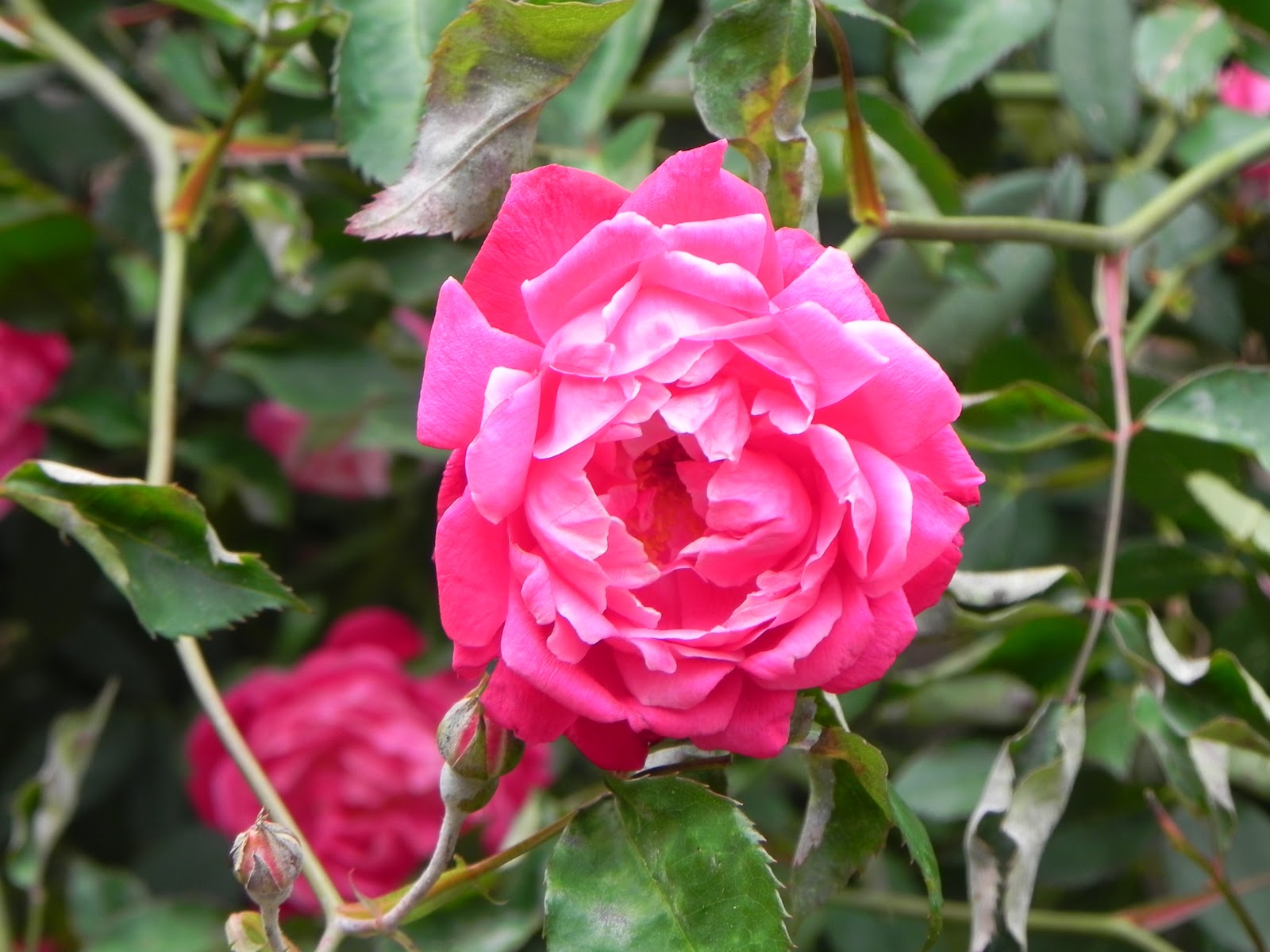


All in all, it was a very good day. It was a reconnection to nature, to spirit, that I needed after stresses of the week. And it reminded me once again of why I do what I do: life.

Saturday, March 26, 2011
Flexitarianism
As I may have mentioned before, for Lent, my church is encouraging its members to fast from something every Thursday, to end on Maundy Thursday (the Thursday before Easter). For me, I have chosen to fast from meat every Thursday, in which I only eat vegetarian foods on Thursdays. It is a spiritual practice to make myself more aware of what I am putting into my body, recognize spiritual solidarity with my animal neighbors, and help the environment by not contributing to the meat industry and its associated mistreatment of animals and carbon footprint via transportation of products, etc. At least for that one day a week. I will likely continue the practice after Lent by participating in a movement called "Meatless Mondays", which was begun more from a health standard, but also can be viewed with the same aforementioned spiritual standpoint as well - my decision to continue it on Mondays is primarily one of semantics (the name is easy to think of, and therefore, remember to practice), and the fact that Mondays are typically less busy days in my schedule and therefore may have a little more time to put more effort into my cooking.

This practice is one of many along the continuum of omnivore (on one end) and vegan(on the other). It is called Flexitarianism, in which either one is primarily vegetarian, but eats meat occasionally, or is generally a meat eater, but also engages in vegetarian eating on occasion. There are varying levels of Flexitarianism, and a practitioner does so for various personal/spiritual reasons. There are also Pollotarians, who eat poultry but not red meat, and Pescetarians, who eat seafood, but not red meat or poultry. I don't know that I can ever see myself becoming full-out Vegetarian or Vegan, but I find this Flexitarianism is at least a good start or middle-ground, and a good addition to my spiritual practice as Druid, Panentheist, animal rights supporter, and environmentalist. I can't recycle very well where I live, so this is something small I can do with what resources I have available to me. To assist with this, I stumbled upon a book at Books-A-Million, called Cooking Light Way to Cook Vegetarian . This is actually a big step for me, as to date my cooking has been confined primarily to things like Chef Boyardee, Banquet, and other basic TV dinners, with the exceptions of MorningStar Veggie Burgers I occasionally buy. Hopefully this will help me to develop healthier eating , as well as teach me some basic independent living skills that weren't very well reinforced in my college years.
This practice is one of many along the continuum of omnivore (on one end) and vegan(on the other). It is called Flexitarianism, in which either one is primarily vegetarian, but eats meat occasionally, or is generally a meat eater, but also engages in vegetarian eating on occasion. There are varying levels of Flexitarianism, and a practitioner does so for various personal/spiritual reasons. There are also Pollotarians, who eat poultry but not red meat, and Pescetarians, who eat seafood, but not red meat or poultry. I don't know that I can ever see myself becoming full-out Vegetarian or Vegan, but I find this Flexitarianism is at least a good start or middle-ground, and a good addition to my spiritual practice as Druid, Panentheist, animal rights supporter, and environmentalist. I can't recycle very well where I live, so this is something small I can do with what resources I have available to me. To assist with this, I stumbled upon a book at Books-A-Million, called Cooking Light Way to Cook Vegetarian . This is actually a big step for me, as to date my cooking has been confined primarily to things like Chef Boyardee, Banquet, and other basic TV dinners, with the exceptions of MorningStar Veggie Burgers I occasionally buy. Hopefully this will help me to develop healthier eating , as well as teach me some basic independent living skills that weren't very well reinforced in my college years.
Tuesday, March 22, 2011
Creation Spirituality
Recently, I came across something, I believe through either my church or the Celtic Spirituality group, called Creation Spirituality . It is a fairly recent movement within liberal/progressive Christianity, developed by liberal theologian Matthew Fox in the 1970s. Seeing as how Matthew Fox is an Episcopal priest, it is a form of mystical Christianity, yet it draws from the mystical versions of other religions, as well as indigenous religions, as well. Although some websites list ten principles, the website which seems to be most detailed, and likewise most common in a Google search, lists twelve principles (taken directly from the linked website):
1. The universe is fundamentally a blessing.
Our relationship with the Universe fills us with awe.
2. In Creation, God is both immanent and transcendent. This is panentheism which is not theism (God out there) and not atheism (no God anywhere).
We experience that the Divine is in all things and all things are in the Divine.
3. God is as much Mother as Father, as much Child as Parent, as much God in mystery as the God in history, as much beyond all words and images as in all forms and beings.
We are liberated from the need to cling to God in one form or one literal name.
4. In our lives, it is through the work of spiritual practice that we find our deep and true selves.
Through the arts of meditation and silence we cultivate a clarity of mind and move beyond fear into compassion and community.
5. Our inner work can be understood as a four-fold journey involving:
- awe, delight, amazement (known as the Via Positiva)
- uncertainty, darkness, suffering, letting go (Via Negativa)
- birthing, creativity, passion (Via Creativa)
- justice, healing, celebration (Via Transformativa)
We weave through these paths like a spiral danced, not a ladder climbed.
6. Every one of us is a mystic.
We can enter the mystical as much through beauty (Via Positiva) as through contemplation and suffering (Via Negativa). We are born full of wonder and can recover it at any age.
7. Every one of us is an artist.
Whatever the expression of our creativity, it is our prayer and praise (Via Creativa).
8. Every one of us is a prophet.
Our prophetic work is to interfere with all forms of injustice and that which interrupts authentic life (Via Transformativa).
9. Diversity is the nature of the Universe. We rejoice in and courageously honor the rich diversity within the Cosmos and expressed among individuals and across multiple cultures, religions and ancestral traditions.
10. The basic work of God is compassion and we, who are all original blessings and sons and daughters of the Divine, are called to compassion.
We acknowledge our shared interdependence; we rejoice at one another's joys and grieve at one another's sorrows and labor to heal the causes of those sorrows.
11. There are many wells of faith and knowledge drawing from one underground river of Divine wisdom. The practice of honoring, learning and celebrating the wisdom collected from these wells is Deep Ecumenism.
We respect and embrace the wisdom and oneness that arises from the diverse wells of all the sacred traditions of the world.
12. Ecological justice is essential for the sustainability of life on Earth.
Ecology is the local expression of cosmology and so we commit to live in light of this value: to pass on the beauty and health of Creation to future generations.
These principles are concepts that, overall, I find myself agreeing with very much. It seeks to recognize the Divine within all life. I have long considered myself a Panentheist, one who believes the Divine is both within and beyond creation. Since Creation Spirituality as a "formal" movement is still very new, it does not yet have any set of praxis, or practices, for living out life as a follower of CS, beyond meditation. Nothing quite as clearly laid out as, say, Buddhism's Four Noble Truths and Eightfold Path. However, what it does provide in this stage of its development is a spiritual supplement, a deeper way of looking at life around you, and a deeper way of interpreting whatever spiritual practices or rituals the follower of CS already engages in. Like much earth-centered theology, there does seem to be a bit of Celtic flavor to it. As such, perhaps it will provide a bit of structure in the way I live out the more Druidic aspects of my own spirituality. In any case, it seems like a good way of spelling out ones' beliefs within a liberal Christian context, to someone who may not understand liberal Christian theology.
1. The universe is fundamentally a blessing.
Our relationship with the Universe fills us with awe.
2. In Creation, God is both immanent and transcendent. This is panentheism which is not theism (God out there) and not atheism (no God anywhere).
We experience that the Divine is in all things and all things are in the Divine.
3. God is as much Mother as Father, as much Child as Parent, as much God in mystery as the God in history, as much beyond all words and images as in all forms and beings.
We are liberated from the need to cling to God in one form or one literal name.
4. In our lives, it is through the work of spiritual practice that we find our deep and true selves.
Through the arts of meditation and silence we cultivate a clarity of mind and move beyond fear into compassion and community.
5. Our inner work can be understood as a four-fold journey involving:
- awe, delight, amazement (known as the Via Positiva)
- uncertainty, darkness, suffering, letting go (Via Negativa)
- birthing, creativity, passion (Via Creativa)
- justice, healing, celebration (Via Transformativa)
We weave through these paths like a spiral danced, not a ladder climbed.
6. Every one of us is a mystic.
We can enter the mystical as much through beauty (Via Positiva) as through contemplation and suffering (Via Negativa). We are born full of wonder and can recover it at any age.
7. Every one of us is an artist.
Whatever the expression of our creativity, it is our prayer and praise (Via Creativa).
8. Every one of us is a prophet.
Our prophetic work is to interfere with all forms of injustice and that which interrupts authentic life (Via Transformativa).
9. Diversity is the nature of the Universe. We rejoice in and courageously honor the rich diversity within the Cosmos and expressed among individuals and across multiple cultures, religions and ancestral traditions.
10. The basic work of God is compassion and we, who are all original blessings and sons and daughters of the Divine, are called to compassion.
We acknowledge our shared interdependence; we rejoice at one another's joys and grieve at one another's sorrows and labor to heal the causes of those sorrows.
11. There are many wells of faith and knowledge drawing from one underground river of Divine wisdom. The practice of honoring, learning and celebrating the wisdom collected from these wells is Deep Ecumenism.
We respect and embrace the wisdom and oneness that arises from the diverse wells of all the sacred traditions of the world.
12. Ecological justice is essential for the sustainability of life on Earth.
Ecology is the local expression of cosmology and so we commit to live in light of this value: to pass on the beauty and health of Creation to future generations.
These principles are concepts that, overall, I find myself agreeing with very much. It seeks to recognize the Divine within all life. I have long considered myself a Panentheist, one who believes the Divine is both within and beyond creation. Since Creation Spirituality as a "formal" movement is still very new, it does not yet have any set of praxis, or practices, for living out life as a follower of CS, beyond meditation. Nothing quite as clearly laid out as, say, Buddhism's Four Noble Truths and Eightfold Path. However, what it does provide in this stage of its development is a spiritual supplement, a deeper way of looking at life around you, and a deeper way of interpreting whatever spiritual practices or rituals the follower of CS already engages in. Like much earth-centered theology, there does seem to be a bit of Celtic flavor to it. As such, perhaps it will provide a bit of structure in the way I live out the more Druidic aspects of my own spirituality. In any case, it seems like a good way of spelling out ones' beliefs within a liberal Christian context, to someone who may not understand liberal Christian theology.
Subscribe to:
Posts (Atom)


 Posts
Posts


